
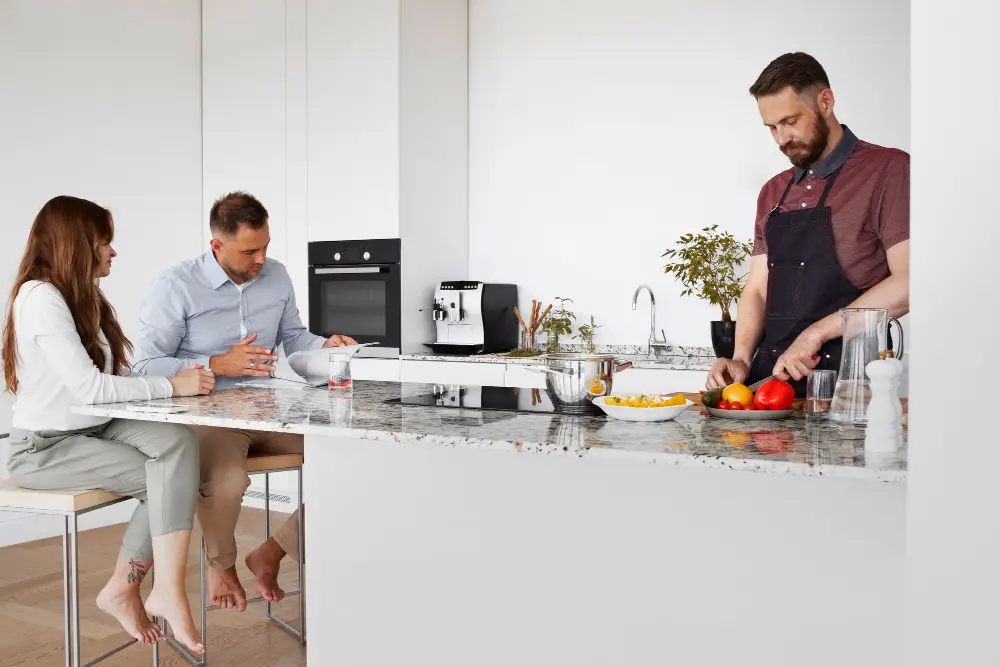
A kitchen with a bad layout makes daily life harder. You walk extra steps to reach the fridge, the dishwasher blocks the only drawer with measuring spoons, and two people cannot work in the same room without bumping into each other. None of that has to do with how the kitchen looks. It is the layout doing the damage.
The right kitchen layout ideas come from how the room gets used, not from a magazine spread. Here are the ones that actually make a kitchen work better, room by room and decision by decision.
Start With the Work Triangle
The work triangle is a concept that has been around since the 1940s, and it still holds up. Draw a line between the sink, the cooktop, and the refrigerator. Add the three sides together. The total should fall between 13 and 26 feet.
If the triangle is too tight, two cooks cannot move around each other. If it is too wide, you spend the day walking from one zone to another. Most well-designed kitchens land between 16 and 22 feet of total triangle distance.
Pick the Right Layout for the Space
Not every kitchen can fit every layout. The shape of the room dictates most of this.
Galley Kitchens
Two parallel runs of cabinets with a walkway in the middle. Galley kitchens are the most space-efficient layout, which makes them the right pick for narrow rooms or apartments. Keep at least 42 inches of walkway between the two runs. Forty-eight inches is better if two people will cook together.
The L Layout
Cabinets along two walls that meet at a corner. The L layout is the most common residential setup because it works in almost any room size. The corner is dead space unless you put in a lazy Susan, pull-out drawers, or a 45-degree corner cabinet.
The U Layout
Three walls of cabinets and counters. The U layout gives the most storage and counter space per square foot, but it needs at least 8 feet of width to feel open. Anything narrower starts to feel like a cave.
Kitchens With Islands
An island works in any layout that has 10 feet of clear floor space in addition to the cabinet runs. The walkway around the island should be 42 to 48 inches on every side. Less than that, and the room feels cramped. More than that, and the island stops being part of the work flow.
Zone the Room by Task
The old idea of one big kitchen has given way to zones. A modern kitchen has a prep zone, a cook zone, a clean zone, and a storage zone. Each zone has its own primary tools nearby.
The prep zone is usually next to the sink, with cutting boards, knives, mixing bowls, and prep tools within arm’s reach. The cook zone surrounds the range, with spices, oils, pots, and pans in nearby drawers and cabinets. The clean zone holds the dishwasher, trash pull-out, and dish storage. The storage zone holds dry goods and pantry items, usually furthest from the heat.
Setting up zones means the right tool is always two steps away from where it is needed. No more crossing the kitchen to grab a spatula.
Get Walkway Widths Right
This is one of the most overlooked parts of kitchen design. Walkways that are too narrow make a kitchen feel small no matter how nice the cabinets look.
The minimum walkway width in a single-cook kitchen is 36 inches. For a two-cook kitchen, bump that to 42 inches. Walkways near major appliances, the oven, fridge, dishwasher, should be 48 inches to allow doors to open with someone standing on the other side.
Put Storage Where the Tools Get Used
Storage placement is where most kitchens fail. Cabinets get installed in standard locations without thinking about what goes in them. The result is a kitchen full of storage that nobody uses well.
Drawers Beat Doors for Lower Cabinets
Deep drawers in lower cabinets pull out and show you everything inside. Doors on lower cabinets force you to bend down and dig through to the back. For pots, pans, dishes, and bulk items, drawers win every time.
Upper Cabinets for Light Items
Glasses, mugs, and lightweight items go in upper cabinets. Anything heavy belongs in drawers or low cabinets.
A Pantry Within Six Steps
The pantry should be no more than six steps from the prep zone. If it is on the other side of the room, ingredients get left out instead of put back.
Plan Around the Refrigerator
The fridge is the most-used appliance in the kitchen, and it usually ends up in the wrong place. The door swing matters as much as the location. A fridge door that opens into a walkway blocks traffic every time it is used.
Place the fridge at the end of a cabinet run, with the hinge side away from the prep area. This keeps the door out of the work zone and gives a landing space for groceries when they come in from the car.
Counter Heights & Levels
Most kitchens have one counter height, 36 inches. There is no rule saying it has to stay that way. A baking station at 32 inches works better for kneading dough. A bar-height counter at 42 inches gives a place for casual seating without pulling out chairs.
Mixing two or three counter heights in the same kitchen sounds like a problem, but in practice it adds function and visual interest at the same time.
Common Mistakes to Avoid
Three layout mistakes show up over and over. Putting the dishwasher across the room from the sink, so wet dishes drip across the floor. Skipping a landing zone next to the oven, so hot pans have nowhere to go. Designing an island so big it cannot be reached across, which makes the middle a dead zone.
Avoid these three, and most kitchens work better right away.
Final Thought
A kitchen that functions well does not depend on size or budget. It depends on layout decisions made early in the design. Spend time on the work triangle, the zones, the walkways, and the storage placement, and the room will work for years. The cabinets and countertops are what people notice. The layout is what they will live with.