
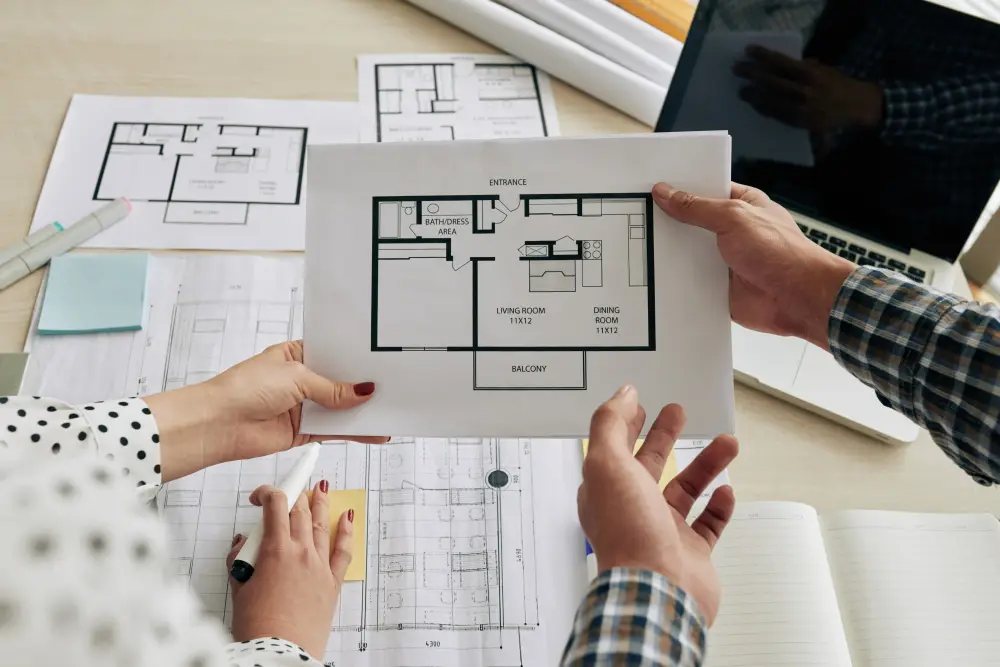
When you start planning a build or a remodel, one of the first things you sort out is how the rooms connect. Open concept floor plans pull the kitchen, dining, and living areas into one shared space. Traditional layouts keep those rooms behind walls and doors. Both work. The right pick comes down to how you live, who lives with you, and what you want the house to feel like every day.
Let’s walk through how each one plays out so you can decide with your eyes open.
What Open Concept Floor Plans Mean
An open concept floor plan removes the walls between the main living areas. You cook, eat, and relax in one connected zone. There are fewer doorways and fewer barriers, so light moves across the whole area and you can see from the kitchen sink all the way to the far window.
People like this setup because it keeps everyone together. You can watch the kids do homework at the counter while you cook. You can talk to guests in the living room without leaving the stove. The space feels bigger than the square footage suggests, since your eye travels across the full room instead of stopping at a wall.
It also gives you flexibility with furniture. Without fixed walls boxing you in, you can rearrange a seating area or move the dining table over time as your needs shift. That freedom appeals to a lot of homeowners who want the option to change things later.
How Traditional Floor Plans Work
A traditional floor plan gives each room its own four walls and a door. The kitchen is the kitchen. The dining room sits on its own. The living room is a separate stop. You move between them through hallways and doorways.
This layout has been around a long time for good reason. Walls give you places to put furniture and art. Doors let you close off a mess, a nap, or a loud movie. Each room can hold its own purpose, its own noise level, and its own use. When you want quiet, you find it. When you want to hide the dishes, you shut the door.
Daily Life in Each Layout
The way a layout reads on paper is one thing. The way it feels at 7 a.m. and at 9 p.m. is another.
Cooking & Hosting
In an open plan, the cook stays in the conversation. You prep dinner and still hear the story someone is telling on the couch. For people who host often, that flow keeps the night moving and keeps everyone in one place instead of scattered across the house.
In a traditional plan, the kitchen sits apart. Some people want that. Cooking smells, heat, and clutter stay in one room. Guests sit in the dining room and the work stays out of sight. If you cook big meals and would rather skip the audience, walls help.
Noise & Quiet
Open plans carry sound. A blender, a TV, and a phone call all share the same air. With a full house, that builds up fast. If your household runs loud or runs on different schedules, the noise can wear on you over time.
Traditional plans break sound into pockets. Someone can practice an instrument in one room while another person reads down the hall. Walls do a lot of work here that you only notice once they are gone.
Cost & Construction Differences
Money matters, so let’s talk about it plainly.
Going open often means removing walls. Some of those walls hold up the house. When a wall is load bearing, you can’t just knock it out. A beam has to go in to carry the weight, and that adds labor and material to the job. The wider the span, the bigger the beam, and the bigger the cost.
A traditional layout, or keeping the walls you already have, tends to cost less on the structural side. You skip the beams and the engineering that come with long open spans. If budget drives the project, that gap is worth weighing early in the planning.
There is also heating and cooling to think about. One big open room can be harder to keep at an even temperature, since you can’t close a door to hold the warmth or the cool. Smaller rooms give you more control and can trim your energy bills over the years.
Storage & Wall Space
Walls do more than divide rooms. They hold cabinets, shelves, outlets, and switches. Open plans give you fewer walls, which means fewer spots for storage and fewer places to set a bookshelf or hang a coat rack. People often underrate this until they move in and run out of places to put things.
In a traditional layout, every room brings its own walls and its own storage. Built ins, pantries, and closets have a home. If your household holds a lot of stuff, that wall space pays off in a way you feel daily. It is one of those trade offs that does not show up in a photo but shows up the moment you try to put your life away at the end of the day.
Resale & Long Term Thinking
Buyers have leaned toward open plans for years, and that demand can help when you sell. A bright, connected main floor shows well and photographs well. That said, taste moves in cycles, and more buyers now ask for at least one room they can close off for work or quiet.
A smart middle path keeps the main living and kitchen open while holding onto a closed office, a guest room, or a den. You get the airy feel where you spend most of your time and the privacy where you need it. Many newer homes land right here, and it tends to hold value across changing tastes.
Which One Fits You
Start with how you spend a normal day. If your family gathers in one spot and you host often, an open plan keeps everyone close. If you crave quiet, work from home, or share the house with people on opposite schedules, walls earn their keep.
Think about the budget too. Opening up an older home can mean beams and structural work, while keeping rooms intact stretches your dollars further. Neither answer is wrong. The goal is a layout that matches your life instead of fighting it.
Take a walk through your current place and note where it works and where it frustrates you. Those notes tell you more than any trend ever will. From there, a builder can show you what is possible with your space, your goals, and your budget, and you can shape a floor plan that feels right the day you move back in.