
A deck adds usable space to your home and a spot to enjoy the outdoors, but the first big choice is what to build it from. The two main options are wood and composite, and they go about the job in different ways. One costs less up front, the other costs less to keep up. Here is a straight look at composite vs wood decking so you can pick the one that fits your home, your budget, and how much upkeep you want to deal with.
The Short Version
Wood decking costs less to build and gives you a real wood look, but it needs regular upkeep to stay in shape. Composite decking costs more up front but asks for very little maintenance and lasts a long time. The right pick comes down to how you weigh the cost today against the work and cost over the years. Let’s break down each factor so the choice is clear.
Upfront Cost
Wood wins on the sticker price. A wood deck, especially one built from pressure treated lumber, costs less to build than a composite one. For a homeowner watching the budget, that lower starting cost is the main draw of wood.
Composite costs more per board, so the build costs more at the start. The gap can be sizable on a big deck. But the upfront number is only part of the story, because the two materials cost very different amounts to own over time. To really compare them, you have to look past the build price to the years that follow.
Maintenance Over Time
This is where the two materials split the most, and it often decides the whole choice.
Wood Needs Regular Work
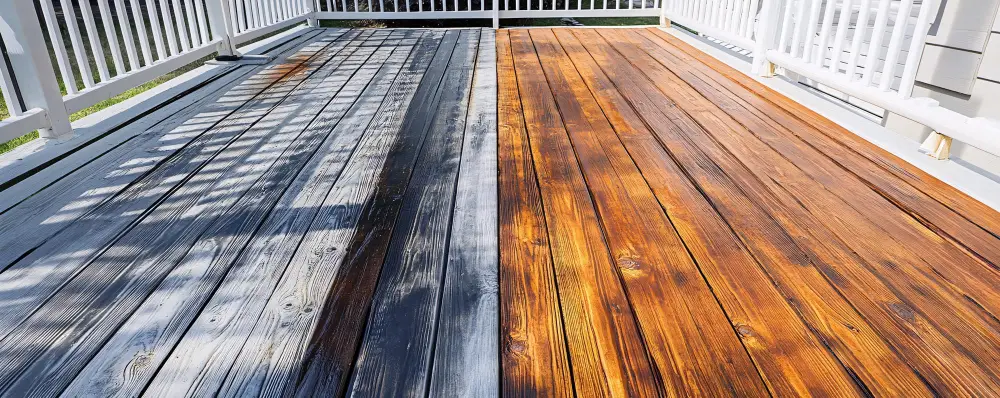
A wood deck needs upkeep to stay sound and looking right. That means cleaning it, and sealing or staining it every year or two to protect it from sun, rain, and rot. Skip the upkeep and wood fades, cracks, splinters, and eventually rots. The cost of stain and the time it takes add up over the years, and for a lot of people the yearly chore is the biggest downside of wood.
Composite Barely Needs Any
Composite decking is built from wood fibers and plastic, and it does not need sealing or staining. A wash now and then to clear dirt and mildew is about all it asks. It does not rot, splinter, or fade the way wood does. Over the life of the deck, that saved time and money is the main reason people pay more for composite up front.
How Long It Lasts
Lifespan is tied closely to maintenance. A wood deck that gets its regular upkeep can last a long time, but a neglected one wears out much faster. The life of a wood deck depends on how much you keep after it.
Composite lasts longer with far less effort. Most composite decking comes with a long warranty, often decades, because it holds up to weather without the upkeep wood needs. If you want a deck you can mostly forget about for years, composite has the edge on lasting power.
Looks & Feel
Wood has a look and feel that many people love, and some composites still cannot fully match it. Real wood grain, the smell, and the natural warmth appeal to homeowners who want the genuine thing. Fresh wood, stained well, is hard to beat for a classic look.
Composite has come a long way, though. Newer boards copy wood grain closely and come in many colors that hold up without fading. Composite also stays consistent, with no knots, warping, or boards that twist over time. The trade is that wood gives you the real thing with the upkeep that comes with it, while composite gives you a steady look that stays put with almost no work.
Heat & Comfort Underfoot
One thing people do not always think about is how the deck feels underfoot on a hot day. Composite, especially in darker colors, can get hotter in direct sun than wood does. On a summer afternoon, a dark composite deck can be uncomfortable for bare feet.
Wood tends to stay cooler in the sun, which is worth considering if your deck gets full afternoon light and you like to go barefoot. Lighter composite colors help with the heat, so if you love composite but worry about the heat, going lighter is a smart move. It is a small factor, but it matters for how you actually use the deck in summer.
Environmental Angle
Both materials have an environmental story worth a quick look. Wood is a natural material, and if it comes from responsibly managed forests, it is renewable. The catch is the stains and sealers used to maintain it, which add chemicals over the years.
Much composite decking is made partly from recycled wood and plastic, which keeps waste out of landfills. It does not need the yearly chemicals that wood does. At the end of its life, though, composite is harder to recycle than wood. Neither is clearly greener across the board, so it depends on which part of the picture matters most to you.
Cost Over the Life of the Deck
To compare the two fairly, add up the cost over many years, not just the build. Wood costs less to build but more to maintain, with stain, cleaning, and the occasional board replacement adding up. Composite costs more to build but very little to keep, so the yearly cost stays low.
Over a long enough time, the gap between the two narrows, and a composite deck you keep for decades can end up costing about the same as a wood one you maintain and repair along the way. If you plan to stay in the home a long time, that math often favors composite. If you are on a tight budget now or plan to move soon, wood’s lower starting cost may win.
Which One Fits You
The right choice comes down to a few honest questions about your situation. If you want the lowest cost to build and do not mind the yearly upkeep, wood is a solid pick with a look many people love. If you would rather pay more now and skip the maintenance for years, composite is the way to go.
Think about how long you plan to stay, how much upkeep you are willing to do, and how the deck will get used. A family that wants a low fuss deck for years of use leans toward composite. A homeowner who loves real wood and does not mind the work leans toward wood. Talk it through with a deck builder who can price both for your space, and you will land on the material that fits your home and your life.