
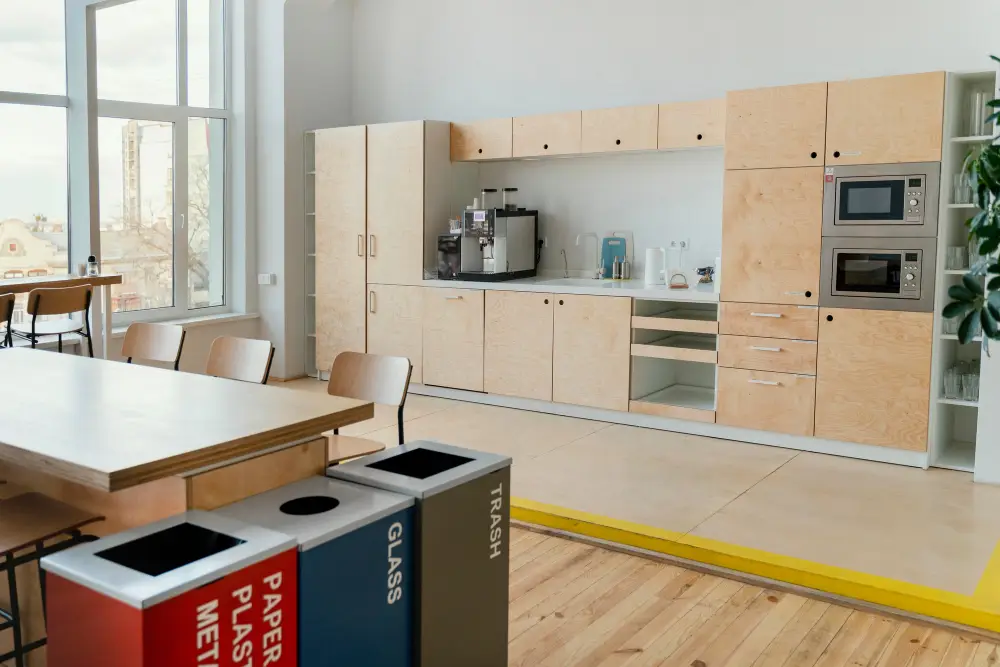
Storage is the thing people wish they had more of the second they move in. Closets fill up, counters get cluttered, and the kitchen never seems to hold everything. Stock cabinets help, but they come in set sizes that leave gaps and wasted corners. Custom cabinets fix that. They get built to fit your space and your stuff, which means more room in the same footprint. Here are custom cabinets storage ideas worth knowing before you plan your next project.
Why Custom Beats Stock for Storage
Stock cabinets come in fixed widths. When your wall does not match those sizes, you end up with filler strips and dead space that holds nothing. Over a whole kitchen, that adds up to real storage you paid for and can’t use.
Custom cabinets get built to the exact size of your wall, floor to ceiling and corner to corner. Nothing goes to waste. The cabinet maker can also adjust the inside, with deeper drawers, taller shelves, and dividers built around what you actually own. That flexibility is the whole point, and it is where the extra storage comes from.
Use the Full Height of the Room
Most stock cabinets stop short of the ceiling, leaving a strip of dead space above that collects dust and nothing else. Custom cabinets can run all the way up. That top section holds the things you reach for a few times a year, like serving platters, holiday dishes, and small appliances you rarely use.
Tall cabinets need a step stool to reach the top, so the trick is to plan what goes up there. Daily items stay at eye level and within easy reach. The rare stuff goes high. Done right, you gain a whole shelf of storage out of space that usually sits empty.
Fix the Corners
Corner cabinets are where storage goes to disappear. The space exists, but you can’t reach the back of it, so it fills with forgotten pots and lost lids. This is one of the spots where custom work pays off the most.
Pull Out Corner Units
A custom corner can hold a pull out unit that swings or slides the back of the cabinet out to you. Instead of crawling halfway in to find a pan, you pull a shelf and everything comes forward. The deep corner that used to swallow your cookware turns into usable space you reach without bending.
Drawer Corners
Another option turns the corner into a set of angled drawers that meet at the corner itself. They use the full depth of the space and keep everything in view when you open them. For a busy kitchen, that kind of access saves time every day.
Drawers Over Doors for Lower Cabinets
Lower cabinets with doors force you to kneel and dig to the back. Things get lost, and you forget what you own. Swapping those doors for deep drawers changes how the whole lower run works. You pull a drawer and the whole contents slide out where you can see them.
Deep drawers hold pots, pans, lids, and even dishes with no bending and no digging. Dividers inside keep the stacks from sliding around. For most people, the move from doors to drawers on the lower cabinets is the single biggest jump in everyday storage and ease.
Build Storage Into Odd Spaces
Every kitchen has narrow gaps that stock cabinets can’t fill. The strip beside the fridge, the space under a window, the run next to the stove. Custom work turns those gaps into storage instead of wasted inches.
A narrow pull out next to the stove holds oils, spices, and bottles right where you cook. A slim cabinet beside the fridge can store baking sheets and trays standing on their edge, which is the smartest way to keep them. These small additions do not look like much on the plan, but they hold a lot and keep your counters clear.
Dividers, Racks, & Inserts
The inside of a cabinet matters as much as the outside. Custom cabinets let you build the storage to fit what goes in them. Vertical dividers keep cutting boards, trays, and pan lids standing upright instead of stacked in a pile that topples when you grab one.
Pull out racks hold spices at the right height so you read the labels at a glance. Drawer inserts keep utensils, knives, and small tools in their own slots. Built in spots for trash and recycling hide the bins inside a cabinet instead of leaving them out in the room. Each of these is a small thing, and together they make the whole kitchen run smoother.
Storage Beyond the Kitchen
Custom cabinets are not just a kitchen idea. The same thinking works all over the house, and it solves storage problems that store bought furniture never quite handles.
Bathrooms
A bathroom vanity built to fit holds more than a standard one, with drawers for the small stuff and shelves sized to your towels and supplies. Tall linen cabinets use the wall height that often sits empty in a bathroom.
Closets & Mudrooms
A custom closet system fits your clothes and shoes instead of forcing them into a single rod and one shelf. A mudroom bench with cubbies and hooks gives shoes, bags, and coats a home by the door, which keeps the mess from spreading into the rest of the house.
Built Ins Around the Home
Bookshelves around a fireplace, a window seat with drawers underneath, a home office wall with cabinets and a desk built in. These use space that would otherwise sit open, and they hold things while looking like part of the room.
Planning Your Storage
Before you talk to a cabinet maker, take stock of what you own and where it gives you trouble. Note the items that never have a home, the spots that always end up cluttered, and the things you reach for every single day. That list shapes the design more than any catalog photo.
Then think about how you move through the space. The things you use most should sit where you use them, at a height you reach without strain. Group items by task, so baking gear lives near the oven and dishes live near the sink and the table. A cabinet maker who hears how you actually live can build storage around those habits.
Custom cabinets cost more than stock, and the storage you gain is a big part of what you pay for. Built to your space and your stuff, they hold more, hide the clutter, and make the rooms easier to live in every day. Plan them around how you really use your home, and they keep earning their cost long after the project wraps.