
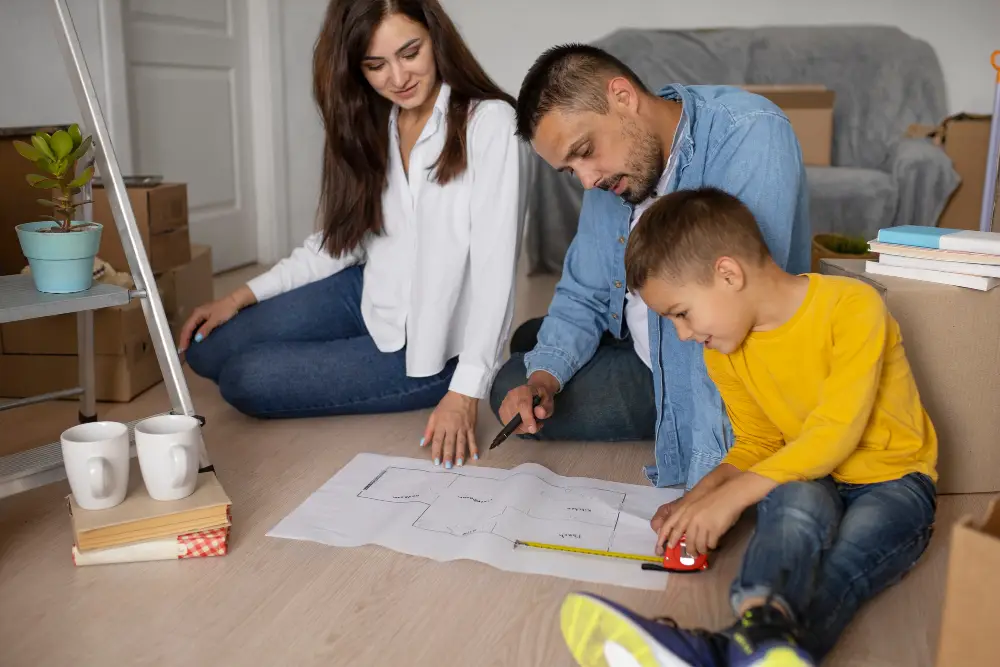
A house that fit fine a few years ago can feel tight once the family grows. More people means more stuff, more noise, and more competition for space. Moving is one answer, but it is expensive and disruptive. Adding on lets you stay in the home and the neighborhood you like while getting the room you need. Here are family home addition ideas that solve the space crunch a growing household runs into.
Add a Bedroom
The most common reason families add on is simple. They need another bedroom. A new baby, a kid who needs their own room, or an aging parent moving in all create demand for a space the house does not have.
A bedroom addition gives everyone their own spot, which cuts the daily friction of sharing. When you plan it, think about where it sits in the house and how it connects to a bathroom. A bedroom far from a bath is less useful than one with easy access. If the budget allows, adding the bedroom and a bathroom together solves two problems at once and adds strong resale value.
Expand the Kitchen
The kitchen is where a family spends much of its time, and a small one feels the squeeze more than any other room. When the whole household ends up crowded into a tight kitchen at dinner time, an expansion changes daily life.
More Room to Gather
A bigger kitchen fits an island, more seating, and space for people to move without bumping into each other. For a family, that means kids can do homework at the counter while dinner cooks, and more than one person can help without a traffic jam.
Better Storage & Function
Expanding the kitchen also lets you add the storage a family needs, with a pantry, more cabinets, and room for the gear a busy household collects. A kitchen that works for a crowd takes a lot of the stress out of feeding a family every day.
Build a Family Room or Bonus Space
As kids grow, they need somewhere to be that is not their bedroom or the formal living room. A family room or bonus space gives everyone a place to spread out, which keeps the whole house calmer.
This kind of room flexes over time. It starts as a playroom for young kids, becomes a hangout for teenagers, and can end up as a media room or a space for adults later. Because it serves so many uses over the years, a bonus room is one of the better values in a family addition. Plan it near the main living areas so it stays part of the household rather than an isolated wing.
Add a Second Bathroom
Few things cause more morning stress than one bathroom and a full house. Adding a second bath, or a third in a bigger family, takes the pressure off the daily rush and makes the whole home run smoother.
A house with more bedrooms than bathrooms leaves value on the table, so this addition pays off at resale too. Even a small second bath near the bedrooms makes a real difference. If space is tight, a half bath in a busy part of the house still helps by taking some load off the main bathroom. For a growing family, more bathrooms is rarely a decision anyone regrets.
Create a Mudroom
A growing family generates a flood of shoes, backpacks, coats, and sports gear, and it all tends to pile up right inside the door. A mudroom gives that mess a home and keeps it from spreading into the rest of the house.
A good mudroom has cubbies, hooks, and a bench, with a spot for each kid’s stuff. Add storage for seasonal gear and a place to drop keys and mail, and the room becomes the drop zone that keeps the rest of the house in order. It is not a large addition, but for a busy family it pays off every day by containing the chaos at the door.
Consider an In-Law Suite
Many families end up with a grandparent or an adult child living with them, and an in-law suite gives that person their own space. A suite usually has a bedroom, a bathroom, and sometimes a small sitting area or kitchenette, so everyone keeps some independence.
An in-law suite works for aging parents, for young adults not ready to move out, and even as a guest space or a rental down the road. That flexibility makes it a smart addition for a family whose needs keep shifting. Plan for accessibility, with a no threshold entry and a bathroom that works for someone with mobility trouble, and the suite stays useful for years.
Add a Home Office
With more people working and studying from home, a dedicated office has gone from a luxury to a need for many families. Trying to work at the kitchen table with kids around rarely goes well, and a quiet room with a door solves it.
A home office does not have to be large. It needs quiet, good light, and enough outlets for the gear. Adding one keeps work and study out of the shared spaces, which helps everyone. It also appeals to buyers, since so many people now look for a room they can work in. For a family juggling jobs, school, and life, a real office space is worth considering.
Build Up or Build Out
Once you know what rooms you want, you face a choice. Add onto the ground floor, or add a second story. Each has trade offs worth weighing.
Building out is often simpler, but it uses up yard space and needs room on the lot. Building up keeps your yard but costs more, since the structure below has to carry the new weight and you need a way to reach the new floor. Your lot size, your budget, and how much yard you want to keep all shape the answer. A builder can look at your home and tell you which path makes more sense for your situation.
Plan Around the Family You Will Have
The best family additions think a few years ahead. Kids grow, needs change, and the space you add should keep working as that happens. A bonus room that flexes, a suite that adapts, and storage that grows with the household all pay off longer than a room built for this year alone.
Start by listing where your home falls short now and where it will fall short in five years. That list points to the addition that fits. From there, a builder can help you weigh the options against your lot and your budget, and turn a house that feels tight into one that has room for the family to grow.